How to Match Wood Floor Undertones to Your Kitchen Cabinets Without Guessing
Choosing hardwood floors that sit directly next to wood kitchen cabinets is the most stressful decision in a home renovation. If you get it wrong, the kitchen feels chaotic and heavily mismatched. You cannot fix bad wood pairings with better lighting or a new rug. The clash happens because people look at the top color of the stain instead of analyzing the chemical undertones of the wood species itself.
My Hands-On Experience with Wood Undertones
In the spring of 2025, I consulted on a kitchen remodel where the homeowner had already purchased expensive custom walnut cabinets. Against my advice, they ordered a red oak floor finished with a slightly yellow clear coat. Once the contractor installed both, the kitchen looked completely jarring. The purple-gray undertones of the walnut violently clashed with the orange-red fire of the oak. We had to hire a specialist to sand the brand-new floors down to bare wood and apply a green-tinted neutralizing stain just to calm the red tones down so they wouldn't fight the cabinets. I learned very quickly that you have to respect the base chemistry of the wood.
Identifying the True Undertone
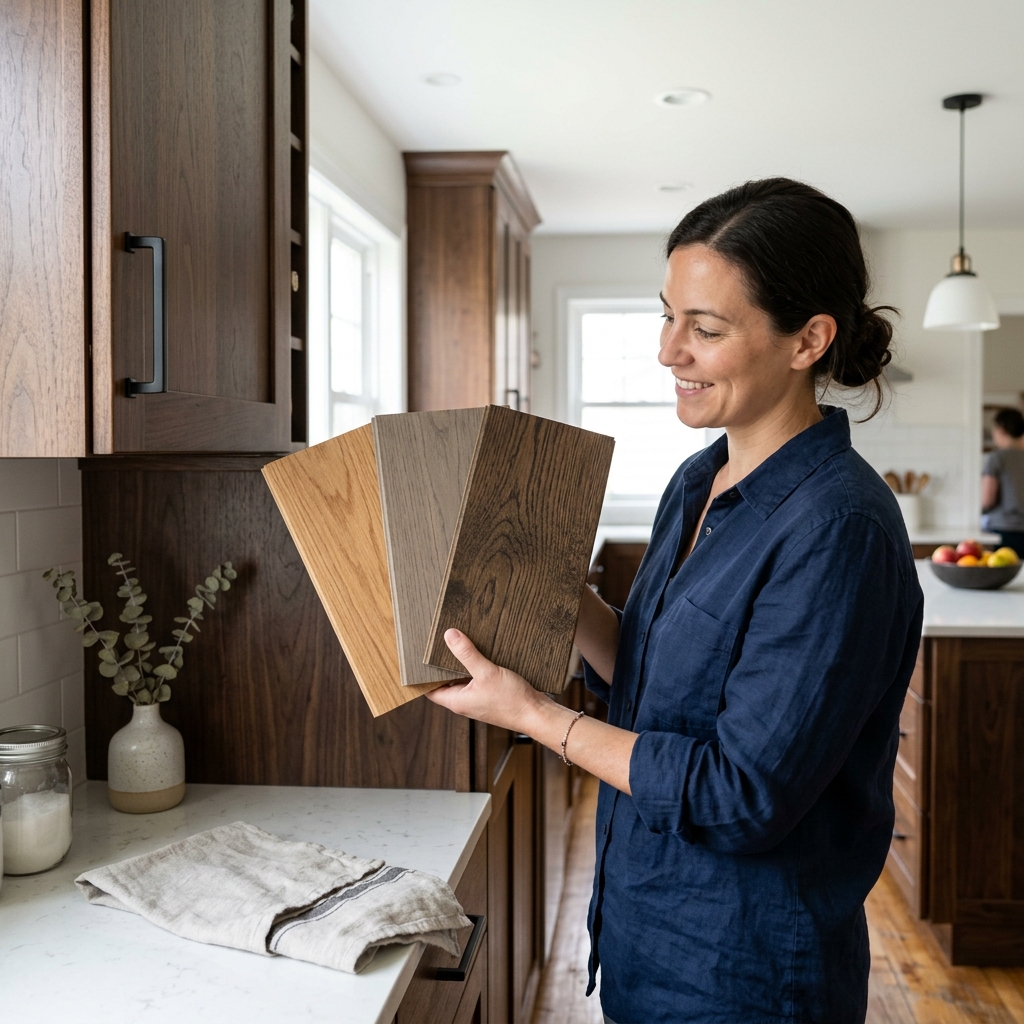
Every piece of wood falls into one of three undertone categories: warm (yellow, orange, red), cool (gray, green, purple), or neutral (ash, true brown). To identify the undertone, take your wood sample outside into direct midday sunlight. Artificial house lights skew yellow or blue. In pure sunlight, stare at the grain. Pine and Douglas fir throw heavy yellow. Cherry and red oak scream orange and red. Walnut often hides a subtle purple or green base. White oak is famously neutral, leaning slightly into ash gray.
The National Kitchen and Bath Association (NKBA) recommends never pairing two woods with dominant, competing warm undertones (like a yellow pine floor with cherry red cabinets). They will constantly fight for visual dominance.
The Rule of Contrast
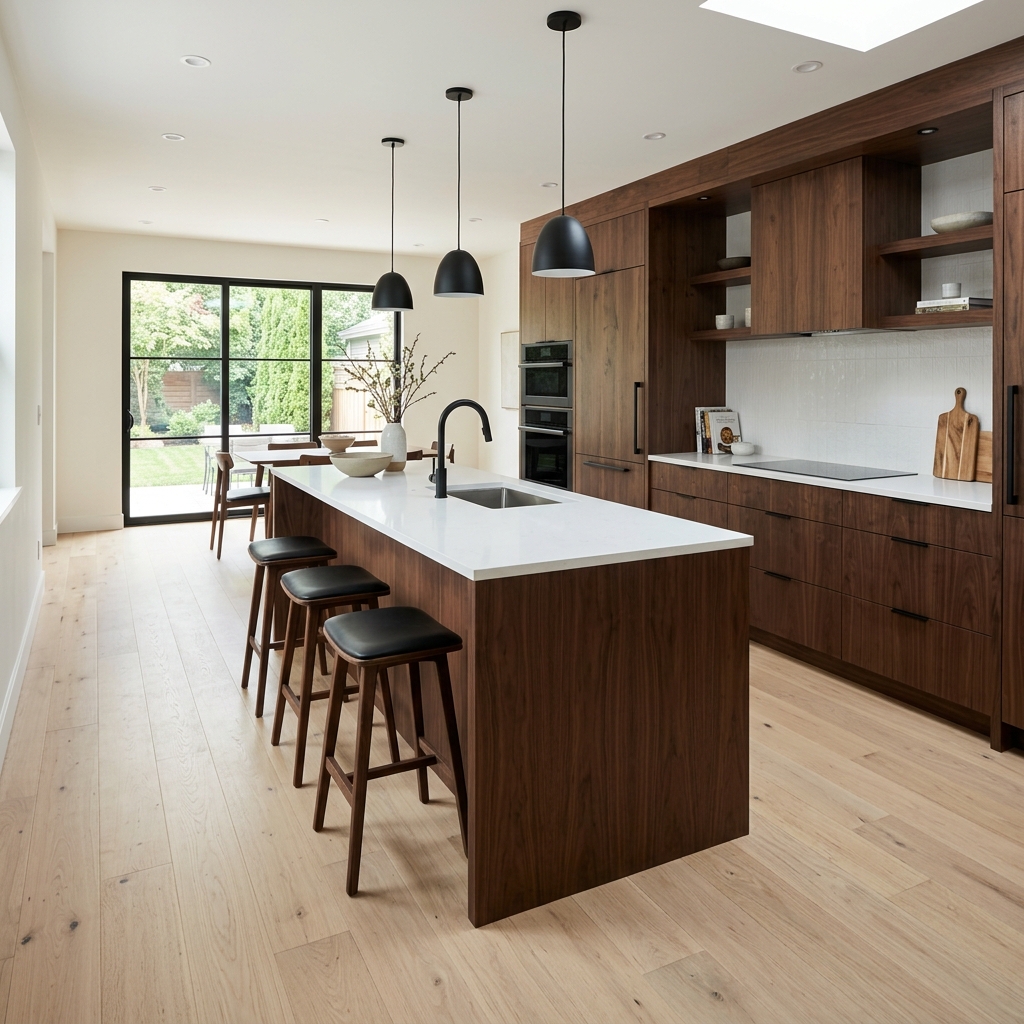
If you want to use wood for both your floors and your cabinets, you must create deliberate contrast. Trying to perfectly match a wood floor to a wood cabinet almost always fails unless you buy them from the exact same manufacturer in the exact same dye lot. A near-match looks like a mistake.
Instead, go at least three shades lighter or three shades darker than your cabinets. If you have dark espresso cabinets, install a light, natural white oak floor. The stark contrast makes both woods look intentional. This concept relies on the same visual balance principles we discuss in our guide to The 60-30-10 Color Rule.
Connecting with the Wall Color
Your wall paint acts as the referee between your floors and your cabinets. If you have warm floors and cool cabinets, you need a wall color that bridges the gap. The Color Marketing Group suggests using complex neutrals—like a greige with a slight green undertone—to neutralize heavy reds in the wood.
Get a large sample board of your chosen floor and hold it directly against your cabinet door. Do not lay them flat on a table. Floors sit horizontally and reflect light up; cabinets sit vertically and absorb light straight on. The only way to know if the undertones match is to mock them up in the exact physical orientation they will live in.
Need to calculate measurements for your space?
Use our free, interactive Paint Calculator to calculate dimensions, box requirements, or guidelines automatically.
Calculate Your Kitchen Paint Needs→