The 30% Rule: How to Budget for Unforeseen Structural Damage
Every homeowner starts a renovation with a spreadsheet full of pretty finishes: quartz countertops, brass hardware, and handmade tile. Nobody creates a line item for 'black mold remediation' or 'replacing a rotten sill plate.' Standard advice tells you to hold 10 percent of your budget in reserve for emergencies. If your house was built before 1990, a 10 percent contingency is a mathematical fantasy. When you tear open plaster walls, you discover a horrifying history of DIY electrical work and slow plumbing leaks. You must budget for structural catastrophe.
My Hands-On Experience with Structural Nightmares
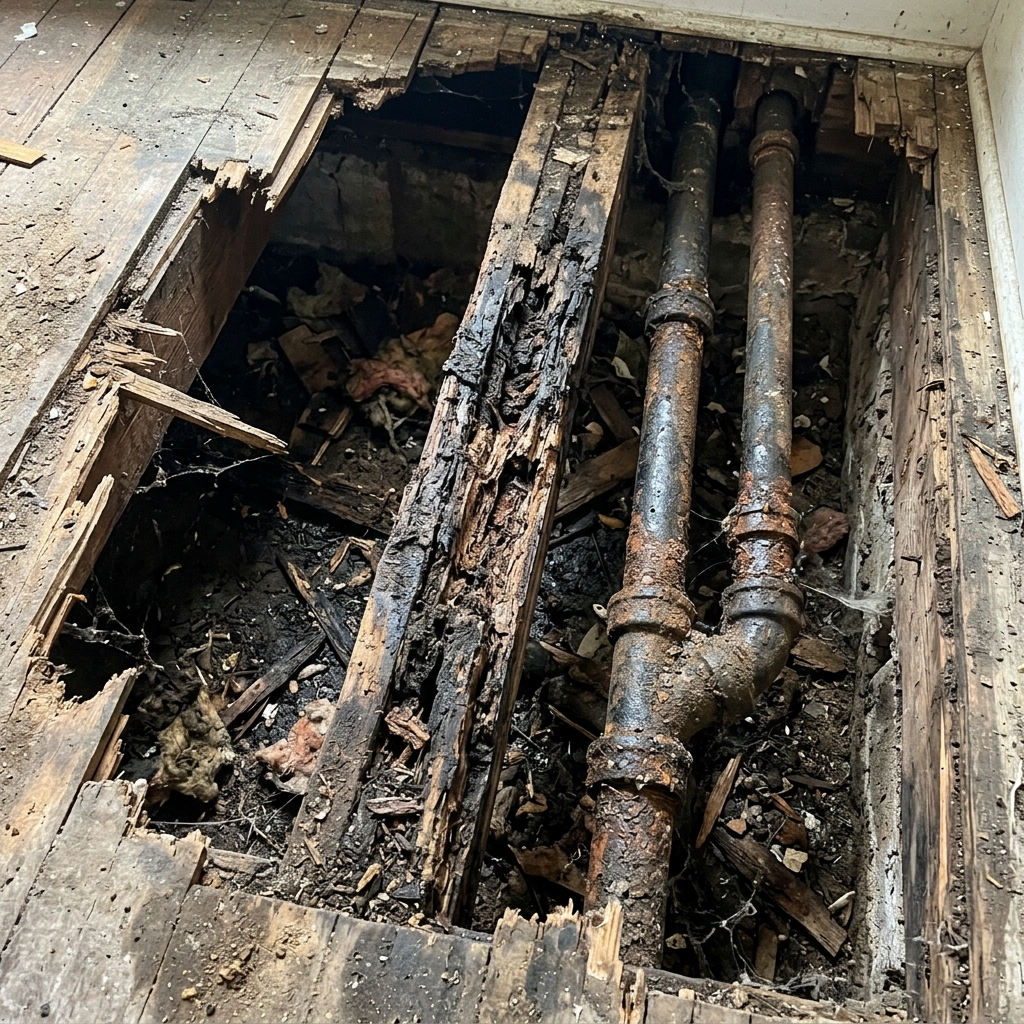
In late 2025, I managed a bathroom gut-renovation on a 1940s colonial. The client had budgeted exactly $25,000 and held a tiny $2,000 emergency fund. On day one of demolition, we pulled up the cast-iron tub. The floor joists underneath it had completely rotted away from a 20-year slow leak. The tub was literally resting on the drywall of the kitchen ceiling below it. Repairing the structural joists, abating the asbestos floor tiles we found underneath the linoleum, and updating the ungrounded wiring cost $11,000. It wiped out their entire finish budget. They had to finish the bathroom with cheap vinyl and fiberglass inserts because they ignored the golden rule of old houses: assume the walls are hiding a disaster.
The Age-Based Contingency Formula
You must scale your contingency fund based on the chronological age of the property. For a home built in the last 10 years, a standard 10 to 15 percent reserve is acceptable. If your home was built between 1970 and 1990, you must hold 20 percent in reserve. If your home was built before 1970, you must aggressively reserve 30 percent.
The National Association of the Remodeling Industry (NARI) warns that homes built before 1978 almost universally contain lead paint and asbestos. Abatement (legally removing toxic materials with a certified crew) is incredibly expensive. If you are knocking down walls to create an open concept layout—as we discussed in our open concept color guide—you are guaranteeing that you will disturb these materials.
Budgeting for the Domino Effect
Structural repairs trigger a financial domino effect. If you find a rotted beam, you have to pay a structural engineer to design a fix. You have to pull an expensive permit. You have to pay a framing crew to install it. And you have to pay to patch the drywall you ripped out to access it.
Never sign a contract that relies on a best-case scenario. Run your numbers through our digital calculator, force the 30 percent contingency variable on, and if you cannot afford the total number, do not start the demolition. It is better to have an ugly, outdated bathroom than an empty, gutted room you cannot afford to put back together.