The Kitchen Work Triangle is Obsolete: Designing Functional Work Zones
If you speak to any traditional kitchen designer, they will immediately lecture you about the 'Kitchen Work Triangle.' This architectural concept, developed in the 1940s, dictates that the stove, the sink, and the refrigerator must form a perfect, unobstructed triangle, with each leg measuring between 4 and 9 feet. In 1940, the average kitchen was a tiny, walled-off box where one person cooked alone. Today, modern kitchens are massive open spaces featuring giant islands, multiple cooks, and complex appliances. Forcing a rigid 1940s triangle into a 2026 open-concept home creates massive traffic jams and wasted space. The work triangle is officially obsolete.
My Hands-On Experience with Obsolete Layouts
In 2025, a client hired me to fix a recently remodeled luxury kitchen that was functionally unworkable. The original architect had obsessed over creating a perfect work triangle between the massive 48-inch range, the main sink on the island, and a gigantic built-in refrigerator. Because the kitchen was physically massive, maintaining that rigid triangle forced all the heavy appliances into one tight corner of the room. The homeowners constantly crashed into each other. If someone opened the oven door, they blocked the person trying to load the dishwasher. We had to execute a massive, expensive redesign. We broke the triangle apart and implemented independent work zones, separating the prep area entirely from the cooking area. It cost them an extra $12,000 to move the plumbing, but it was the only way to make the kitchen usable.
The Rise of the Work Zone Method
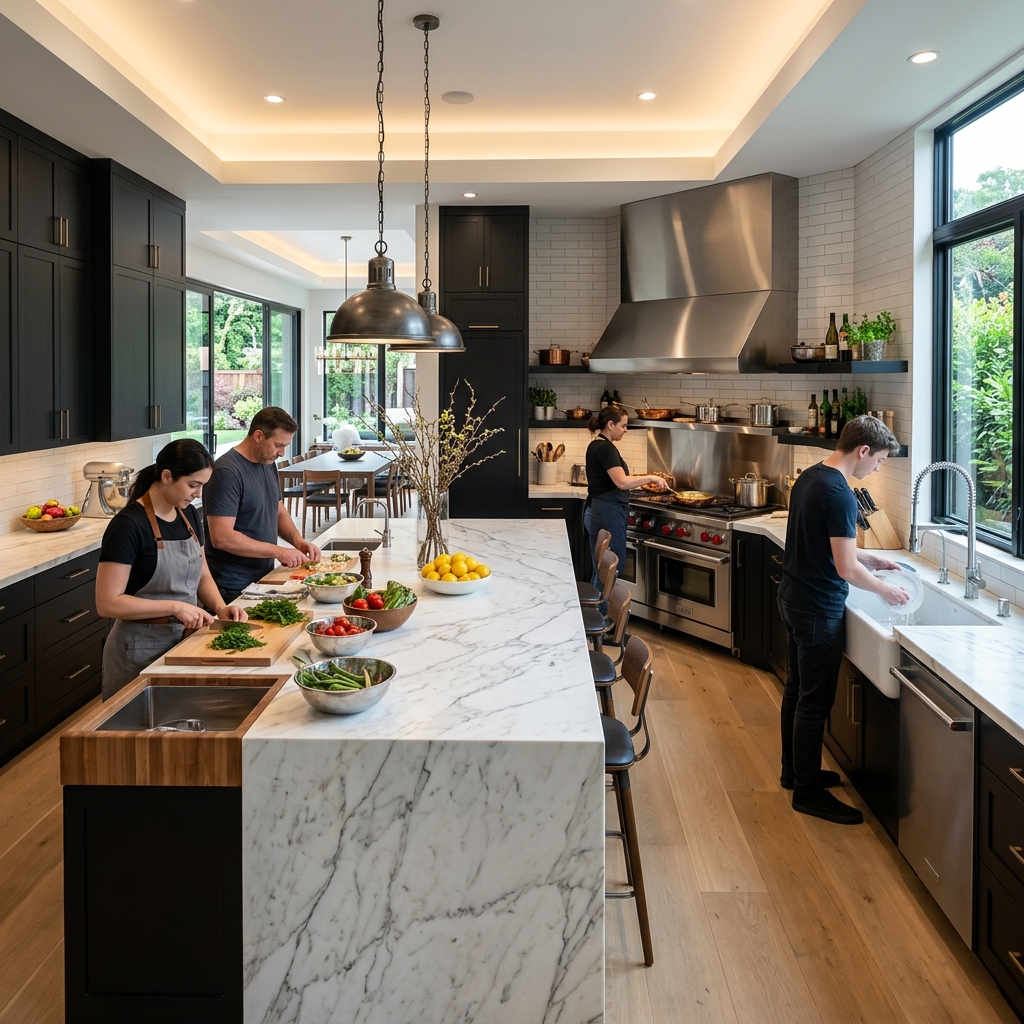
Instead of connecting three appliances with an invisible line, modern design relies on the 'Work Zone' method. You divide the kitchen into dedicated stations based on tasks, ensuring that multiple people can work simultaneously without crossing paths.
The National Kitchen and Bath Association (NKBA) currently prioritizes workflow over strict geometric shapes. The primary zones include the Prep Zone, the Cooking Zone, the Cleaning Zone, and the Consumables (Storage) Zone. The goal is to group the necessary tools and appliances directly within the zone where the task occurs.
For example, the Prep Zone should feature a large, unbroken stretch of countertop, a prep sink, and heavy-duty cutting boards. It must be located directly adjacent to the trash pull-out and the compost bin. You do not want to carry dripping, chopped vegetables across a wide aisle just to reach the stove.
The Appliance Spacing Rules
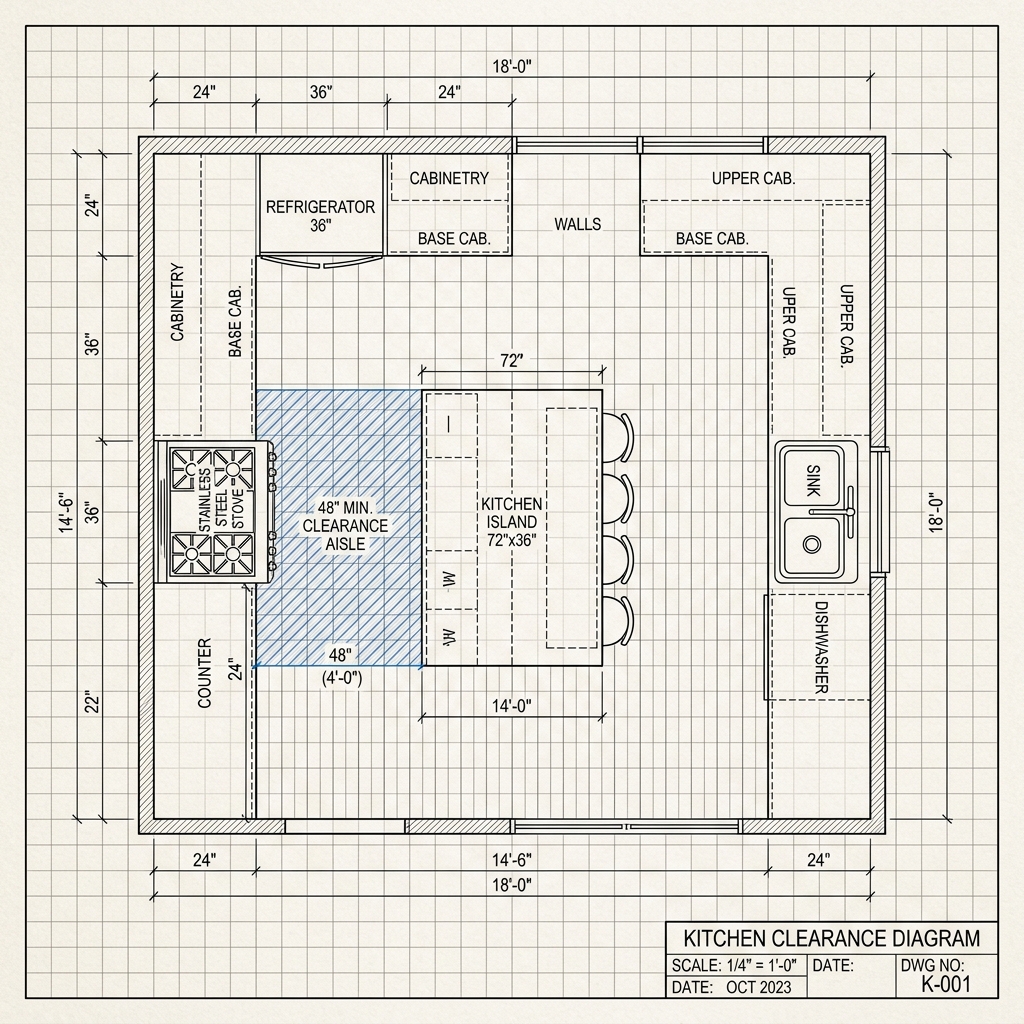
When you break away from the triangle, you must strictly enforce clearance measurements between your newly established zones. A massive kitchen island is useless if the aisles around it are too tight.
The absolute minimum aisle width in a single-cook kitchen is 36 inches. However, in a modern, multi-cook kitchen, you must push that clearance to 42 or 48 inches. If your dishwasher is located on the island directly across from your main oven, you must ensure that both appliance doors can be fully opened simultaneously without hitting each other. If they overlap, your kitchen layout has failed.
Storage Dictates Function
The triangle method completely ignores storage. The Work Zone method integrates it. If you have a dedicated Baking Zone, you do not store your flour and sugar in a pantry across the room. You build deep, heavy-duty drawers directly beneath the counter where you roll out your dough.
You must also consider the vertical storage, which we detailed in our guide on planning custom pantry shelving heights. Keep your heavy cast-iron skillets below the waist in the Cooking Zone, and store your everyday plates in upper cabinets directly above the dishwasher in the Cleaning Zone. When you design a kitchen based on how the human body actually moves, the obsolete triangle naturally disappears.
Need to calculate measurements for your space?
Use our free, interactive Flooring Calculator to calculate dimensions, box requirements, or guidelines automatically.
Calculate Kitchen Flooring→